Our Research
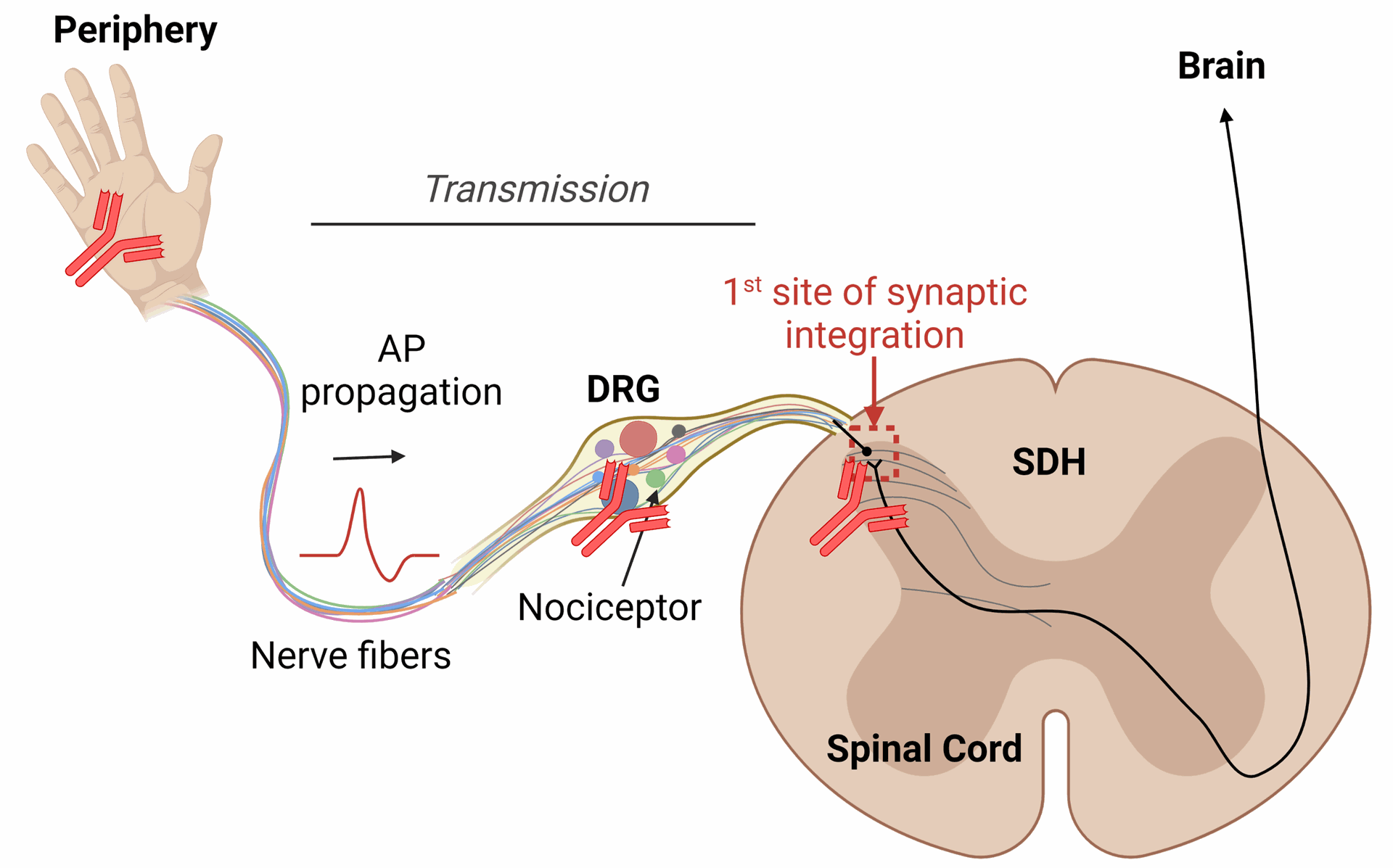
Autoantibodies reveal new mechanisms of pain
Many patients with autoimmune and neuropathic disorders experience pain associated with specific circulating autoantibodies. Working closely with clinical collaborators, we study patient-derived autoantibodies to determine whether they directly alter sensory neuron function and drive pain.
We test whether these autoantibodies bind dorsal root ganglion neurons, increase neuronal excitability, and produce pain-like behaviors in vivo. We then define the molecular mechanisms involved. Our lab is currently focused on autoantibodies against CRMP5, Hu proteins, and FGFR3. By using human autoantibodies as mechanistic probes, we aim to uncover previously unrecognized regulators of sensory neuron excitability and pain.
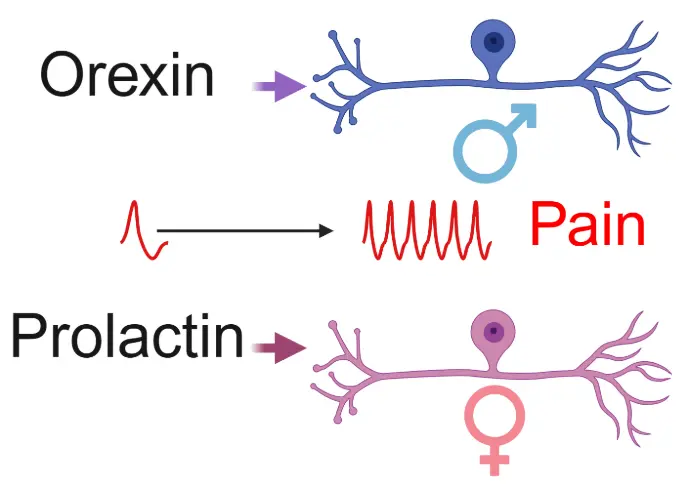
Revealing sex-specific pathways that drive pain
Pain affects both men and women, but the biological pathways that drive it are not always the same. Different cells, hormones, neurotransmitters, and intracellular signals can contribute to pathological pain in a sex-specific way. Our lab studies these differences to understand why pain mechanisms diverge between males and females.
By combining human dorsal root ganglia, spatial transcriptomics, and mechanistic studies of sensory neuron biology, we identify molecular drivers of pain that are unique to each sex. Our goal is to use these insights to guide the development of more precise therapies for chronic pain conditions with strong sex-specific features.
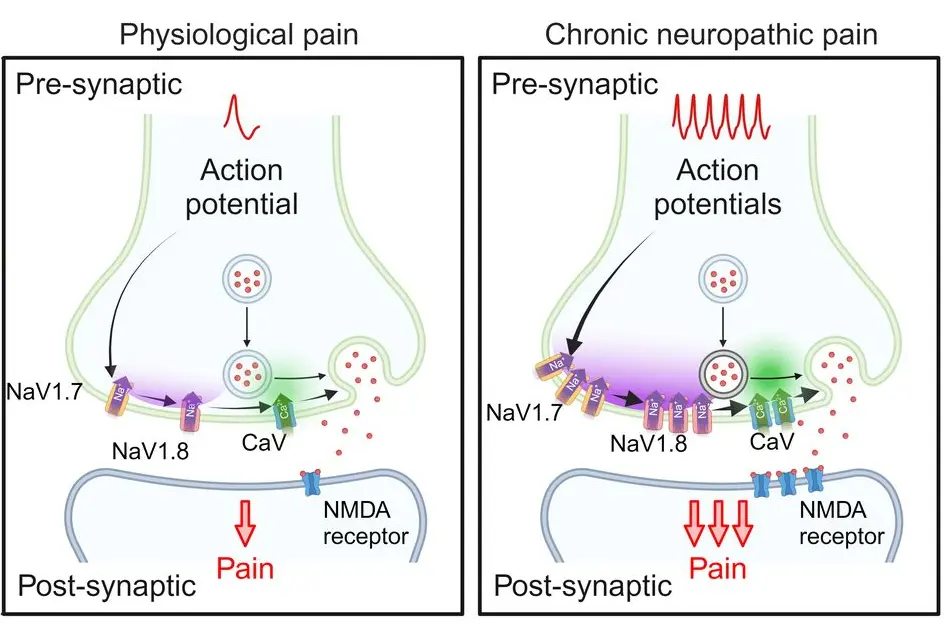
Targeting ion channel trafficking to treat pain
Ion channels control the excitability of sensory neurons and are central drivers of chronic pain. Our lab studies the mechanisms that regulate how these channels traffic to and from the neuronal membrane, where they can shape pain signaling. When these pathways are disrupted, ion channels can accumulate abnormally, enhance excitability, and drive persistent pain.
We aim to define the molecular pathways that govern ion channel trafficking, recycling, and degradation in sensory neurons, and to determine how these processes change in disease. This work opens a new therapeutic avenue: instead of simply blocking ion channels, we seek to restore their physiological regulation to reduce pathological pain.